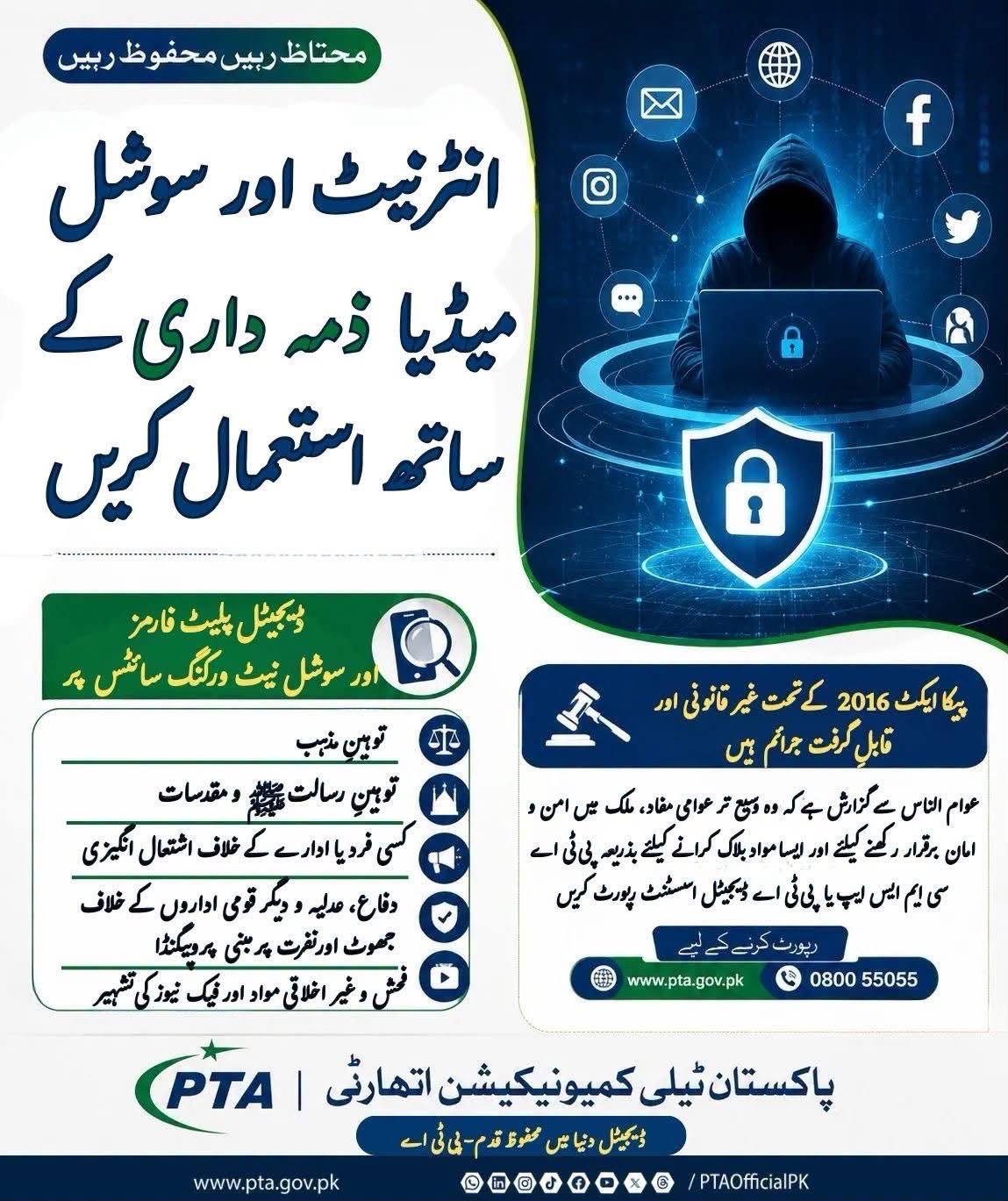
In the digital age, deepfake technology—software that superimposes realistic facial or vocal imagery onto existing footage—has become a powerful tool for misinformation. In Pakistan, the proliferation of such content poses novel legal and societal challenges. This article explores the current regulatory landscape under the Pakistan Telecommunication Authority (PTA) and offers practical advice for individuals and organizations seeking to protect themselves. ## What Are Deepfakes? Deepfakes use deep learning algorithms, particularly Generative Adversarial Networks (GANs), to create hyper-realistic video or audio that can be indistinguishable from genuine recordings. They can be used for benign purposes, such as entertainment or satire, but increasingly they serve malicious ends—defamation, political manipulation, and blackmail. ## The PTA’s Regulatory Framework The Pakistan Telecommunication Authority, established in 1995, governs all electronic communications in Pakistan. While the PTA’s primary statutes focus on infrastructure and spectrum management, recent amendments to the Electronic Communications (Prohibition and Regulation of Content) Ordinance, 2022, explicitly criminalise the dissemination of harmful or defamatory digital content. Key provisions include: 1. **Prohibition of Fake Content (Section 10)** – Prohibits the creation and dissemination of synthetic media that could mislead the public. 2. **Penalties for Distribution (Section 12)** – Imposes fines up to PKR 500,000 or imprisonment up to three years for offenders. 3. **Mandatory Reporting (Section 15)** – Requires telecommunications operators to report suspicious deepfake activity to the PTA within 72 hours. To comply, businesses must: - **Implement monitoring tools** that flag potential deepfake videos. - **Educate staff** on the legal repercussions of sharing unverified content. - **Maintain documentation** of source verification steps for any third‑party material before publishing. ## Practical Steps to Avoid Legal Pitfalls 1. **Verify Sources** – Use reverse‑image or video search tools to confirm authenticity. 2. **Seek Legal Counsel** – When in doubt, consult with a cyber‑law attorney familiar with PTA regulations. 3. **Engage Platform Partnerships** – Many social‑media platforms have in‑built tools for flagging synthetic media. Work with them to label suspect content accurately. 4. **Adopt a Disclosure Policy** – Publicly state that you do not tolerate the distribution of deepfakes. This can act as a deterrent. 5. **Stay Updated** – The PTA periodically updates its guidelines. Subscribe to official PTA releases and participate in industry dialogues on digital integrity. ## Conclusion Deepfake technology blurs the line between reality and fabrication, creating unprecedented risks for truth, reputation, and national security. While the PTA’s new legislation provides a solid legal foundation to counter this threat, proactive measures and digital literacy remain essential. By staying informed, establishing robust verification workflows, and collaborating closely with regulatory bodies, individuals and organisations can navigate the digital landscape more safely and ethically. --- ### For Those Seeking More Tools If you need help creating a service offering Deepfake Detection tools, let me know—I'll produce a detailed service page with FAQ.
Trending
Medical Device Registration in Paki...
May 30, 2026
Domestic Violence Act, 2026 – Safeg...
Jan 27, 2026